







Above: The manufacturing and logistics sectors across North America are linked and interdependent.
May, 2025- Seventy-four percent of 3,200 CEOs from 11 countries (1,000 of them from North America) said that new tariffs are expected to cause business strategy adjustments. The CEO survey, which informs the AlixPartners 2025 Disruption Index, found that a majority of companies are adapting their supply chains and pricing strategies to prepare for potential distortions in material costs and supplier reliability.
One of AlixPartners’ conclusions from its sixth annual survey was: “Normal is over. Disruption is the new economic driver.”
The disruption indices for the U.S. and Canada are at 71 percent in 2025, while China’s disruption index reached 81 percent. CEOs report that manufacturing and supplier footprints are being adjusted as a result of U.S.-China tensions.
The automotive industry’s disruption index landed at 77 percent in 2025, up 5 points from 2024. The commercial vehicle industry was not included in this survey.
Prior to the presidential election in the United States, 47 percent of executives surveyed said they expected the U.S. elections to negatively impact their business, led by those in Canada, China, Germany, Switzerland and the U.S. Import restrictions have soared since 2010, according to the World Trade Organization.
Because so much metal—from scrap to finished parts and fabrications—is transported by truck, Modern Metals believes a dive into how the trade policy decisions affect the North American trucking industry could help metals industry participants prepare for disruption.
TRANSBORDER FREIGHT
First, let’s look at some numbers. According to the TransBorder Freight Annual Report 2024, released March 20 by the U.S. Bureau of Transportation Statistics (BTS), the “manufacturing and logistics sectors across North America are linked and interdependent. America’s land borders with Canada and Mexico are economically vital conduits for North American supply chains, with nearly $3.5 billion in daily cross-border freight shipments.”
U.S. land borders with Canada and Mexico consistently facilitate over $1 trillion in crossborder trade annually. In 2024, the value of total U.S.-international trade was $5.3 trillion, of which U.S. trade with Canada and Mexico comprised 30 percent. In 2024, U.S. freight flows with Canada and Mexico equaled $1.6 trillion, a 1.8 percent increase over 2023.
Surface modes of transportation—truck and rail—lead North American commerce, together accounting for 77.1 percent of all freight flows by dollar value in 2024. Trucking continues to be the dominant form of freight transportation in North America, accounting for 55.5 percent of total flows with Canada and 72.5 percent of flows with Mexico.
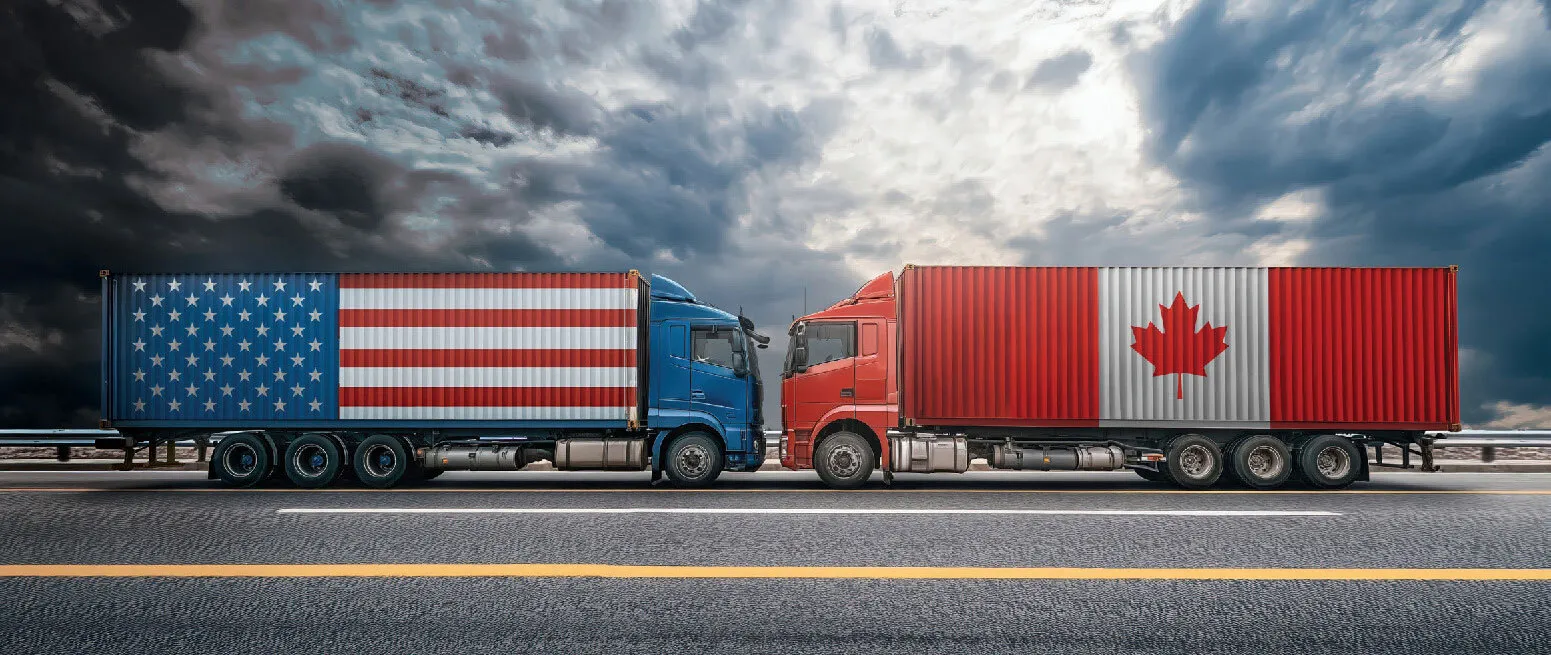
About $3.5 billion in goods are freighted across U.S. borders every day.
BTS reports that Detroit, Port Huron and Buffalo are the top truck ports for U.S. freight flows with Canada. Laredo, Ysleta and Otay Mesa are the top truck ports with Mexico.
Between April 2020 and December 2024, freight by truck with Canada increased from $17.8 billion to $32.4 billion while freight by truck with Mexico grew from $20.8 billion to $45.2 billion.
TARIFF REACTIONS
In response to new tariffs imposed on Canada, Mexico and China, which were to take effect April 2, American Trucking Associations President and CEO Chris Spear stated, “With the success of USMCA and the growing trend of nearshoring, the North American supply chain has become highly integrated and supports millions of jobs. Imposing border taxes on our two largest and most important trading partners will undo this progress and raise costs for consumers.
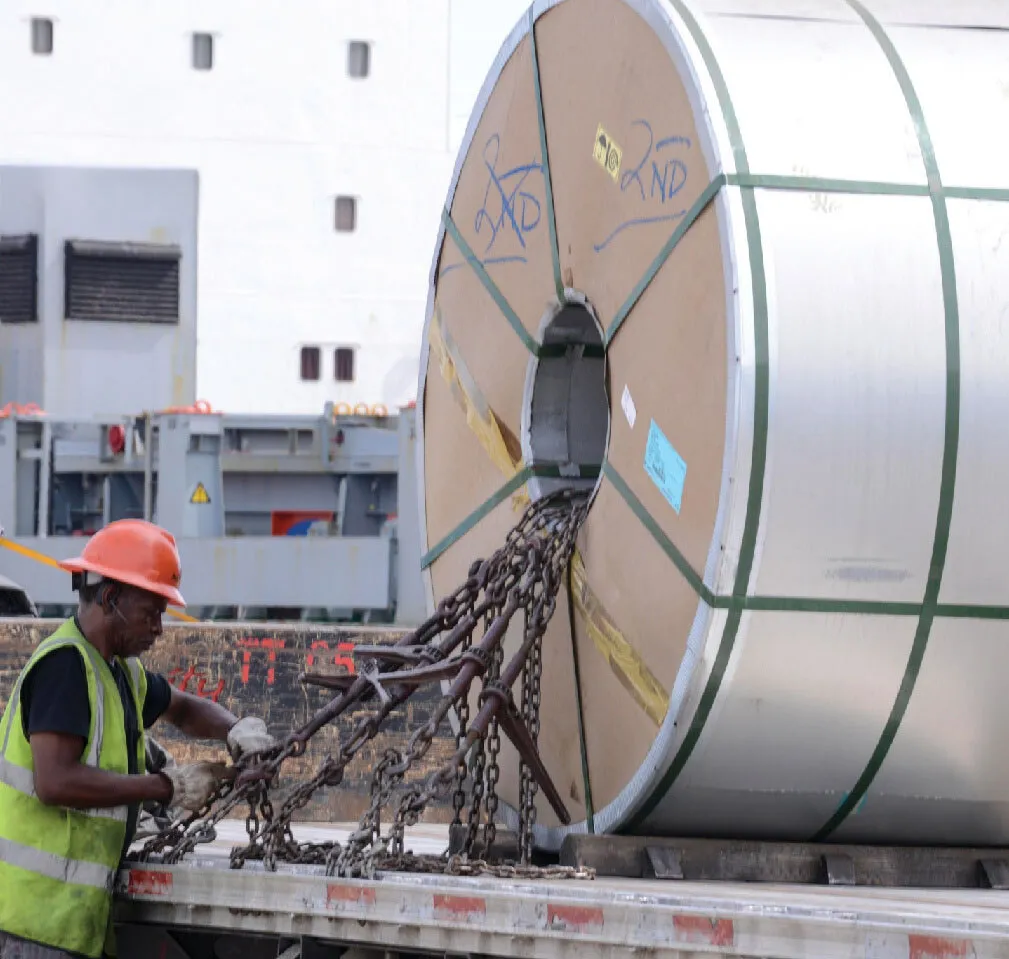
Steel and aluminum tariffs are already in effect, but the supply chain is bracing for blanket tariffs on select trading partners, such as China and the EU.
“The 100,000 truckers hauling 85 percent of the surface trade in goods with Mexico and 67 percent of the goods traded with Canada will bear a direct and disproportionate impact,” Spears warned. “Not only will tariffs reduce cross-border freight, but they will also increase operational costs. The price tag of a new truck could rise by up to $35,000, amounting to a $2 billion annual tax and putting new equipment out of reach for small carriers.”
To prevent “unnecessary economic pain,” the trucking industry urges all parties in the USMCA “to come to the table once again to swiftly reach a new agreement.”
“Widespread tariffs on our customers’ freight to U.S. suppliers and consumers will have shocking effects on our membership and the overall supply chain,” Stephen Laskowski, CEO and president of the Canadian Trucking Alliance, said March 4. “The longer these tariffs are applied, the more strain there will be on carriers, which will lead to jobs losses and permanent closures of fleets,” he added.
In recent fleet surveys, carriers across Canada reported that customers began canceling orders in the weeks leading up to the tariffs, varying from 20 to 80 percent at some businesses in certain provinces. Consequently, carriers began laying off employees, the alliance reports. “As many as one in three fleets surveyed in Ontario, for example, indicated layoffs— a number that is expected to grow in the aftermath of the tariffs.”
The alliance is calling on the Government of Canada to implement achievable temporary relief for the trucking industry, including removing the carbon tax and a federal excise tax on diesel to offset the cost of fleet operations.
It seems that Canada’s political leadership took note of the message. On March 26, the federal government announced two new measures to provide some relief to businesses and workers impacted by ongoing trade tensions with the United States and to support those affected by tariffs. The government is temporarily waiving the one-week employment insurance (EI) waiting period. It also suspended rules around separation for a six-month period, so workers don’t have to exhaust severance pay before collecting EI.
To support companies (including freight handling firms), the government will defer corporate income tax payments, goods and services tax (GST) and harmonized sales tax (HST) from April 2 to June 30, 2025. Details were expected to be released shortly.
PRICING IMPACTS
The resurgence of tariffs despite the USMCA free trade agreement “has raised eyebrows,” according to a report released March 5 by DAT Freight & Analytics, an Oregon-based freight exchange service and provider of transportation information. “These tariffs have taken many by surprise given the depth of economic integration between the U.S. and Canada.”
According to data from DAT, dry van spot-market volumes from Toronto to Chicago jumped 57 percent during the week ending Feb. 28, while rates in this cross-border lane rose by 7 percent. In anticipation of new tariffs announced March 3, along with the potential for reciprocal measures, freight activity and pricing on both sides of the U.S.- Canada border were immediately affected.
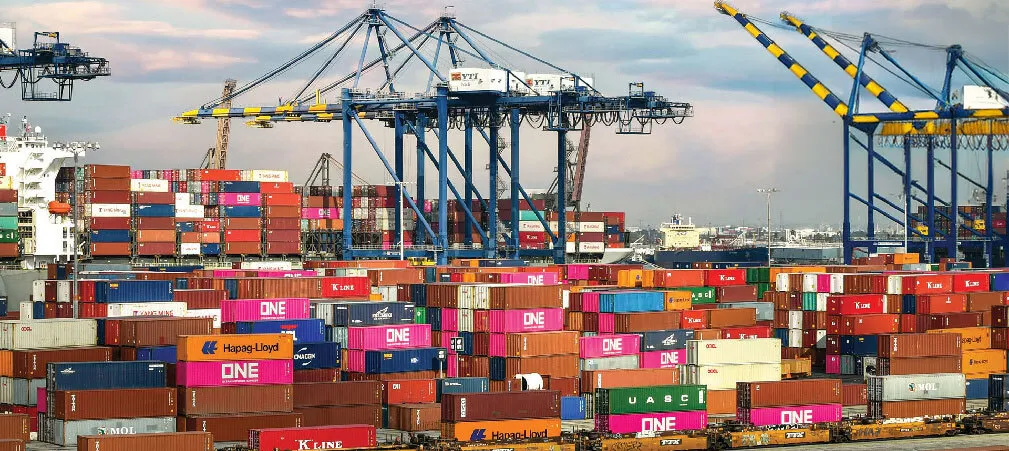
Almost a fifth of the freight entering the Port of Long Beach moves by truck further into distribution networks.

The U.S. imports about 50 percent of the copper it consumess. Canada and Chile are the largest suppliers.
“Spot rates from the U.S. to Canada, on average, have climbed 18 percent since the U.S. elections and 6 percent in the last two weeks to their highest level in two years,” DAT reported. “Steel haulers in the automotive sector in Ontario believe that specific minerals and resources will continue to move cross-border, such as aluminum.”
Increased tariffs on steel and aluminum “not only burden manufacturers who rely on these materials but also make U.S. goods more expensive and less competitive globally. Analysts worry the tariffs risk disrupting supply chains and raising costs for downstream industries reliant on these raw materials.”
Freight carriers are demanding higher rates, contract loads are falling through, and brokers are scrambling to adjust, according to DAT. “Freight rates have been volatile, with instances of rates doubling in the face of increased demand to move goods before tariffs took effect. Brokers are reporting an inability to cover loads as shippers push to transport inventory across borders.
“If a large portion of the estimated 75 percent of Canadian carriers involved in crossborder freight are forced to seek work domestically (as cross-border volumes decrease), those fleets are going to downsize drastically or be forced out of business if the trade war drags on,” the exchange predicts.
Higher costs for metals could make them less attractive to foreign buyers, further reducing demand for U.S. metals exports. DAT suggests that companies that move metals across borders “lock in rates with freight carriers to mitigate the impact of price volatility.”
IMPORT/EXPORT IMPACT
In a report released March 25, an S&P Global industry expert said that combined with immediate retaliatory actions of Canada and Mexico, the 25 percent tariffs’ impact on the trucking industry “could be significant.”
“With almost half of U.S. Class 8 heavy truck sales produced in Mexico, all else equal, the proposed 25 percent tariffs on Mexico would influence truck imports and exports as well as manufacturing, pricing, profitability and volume,” Andrej Divis, executive director, Global Truck Research for S&P, said in his report.
The tariffs have “the potential to depress near-term truck volumes and, over time, reshape commercial vehicle manufacturing.”
Since the formation of the USMCA trade agreement and NAFTA before it, the share of commercial trucks imported from Canada and Mexico has more than doubled and now represents nearly one-third of U.S. new-vehicle demand.
Commercial vehicle builders and their top tier suppliers in the United States “have little or no ability to absorb 25 percent cost increases imposed on goods [including steel and aluminum] from Canada and Mexico, and OEMs are only in a slightly better position. Some parts and systems may cross the borders multiple times during the production process,” Divis wrote.
Although it is difficult to calculate cost impacts all along the supply chain, “this situation makes price increases for U.S. commercial vehicle buyers likely.” Many mills, service centers and fabricators own and operate their own fleets.
S&P Global Mobility estimates that the net impact of tariffs on new U.S. medium- and heavy-duty truck prices could be around 9 percent, after accounting for expected depreciation of the Canadian and Mexican currencies and the relative importance of imported vehicles in the mix.
Higher prices may reduce 2025 new commercial vehicle demand in the United States by as much as 17 percent, at an average price elasticity of demand observed in the past. This would negate all of the previously expected growth this year and result in a down market compared with 2024. Build rates “could decline relatively more sharply than demand,” which leads to lower demand for metals going into trucks and trailers.
WAIT AND SEE
Divis also warns that “the latest incremental tariffs on mainland China and other trading partners further increase the already-high purchase prices of zero-emission vehicles (ZEV), slowing the uptake further.”
The trucking industry might respond to these changes “by re-timing vehicle and parts moves across the border, to avoid or minimize the tariff impact. Duties lasting several months or more than a year will impact trucking industry volumes and, perhaps, result in some shifting of production to the United States from its neighbors, via increased line rates and shifts.”
Duties perceived to be permanent “may reshape the manufacturing footprint and trade flows more fundamentally,” he wrote.
“Amid the recent volatility surrounding enforcement,” S&P’s Global Truck Research team maintains a wait-and-see posture in its commercial vehicle forecast.