






November, 2026- The New Orders Index for the Institute for Supply Management’s September Manufacturing PMI expanded for the ninth consecutive month, registering 55.3 percent, up 1.6 points from August’s 53.7 percent. ISM’s Backlog of Orders Index registered 56.4 percent, up 4.6 points from the August reading.
In September, U.S. manufacturing activity “remained in expansion territory,” commented Susan Spence, who chairs ISM’s Manufacturing Business Survey Committee.
Manufacturing activity and revenues were up slightly in recent months, with most contacts reporting performance at or above expectations, according to the August Beige Book, a summary of economic activity based on a survey conducted by the Federal Reserve Bank.
“Most [manufacturing] firms reported solid to robust demand. Capital expenditures increased slightly overall, with one contact noting higher spending on automation in response to labor scarcity,” the Fed report states. “The outlook improved on balance, even though more contacts perceived an increase in uncertainty. Contacts expected business activity to expand overall but cited the conflict in the Middle East, inflationary pressures and tariffs as ongoing sources of uncertainty.”
DEMAND INDICATORS
In September, three of four demand indicators in the manufacturing PMI report the New Orders, Backlog of Orders and New Export Orders indexes remained in expansion, Spence noted. Companies continued to expand output, generally.
Twelve manufacturing sectors reported growth in September, including primary metals, fabricated metal products, transportation equipment, machinery, electrical equipment, appliances and components. In the latest ISM survey, 40 percent of manufacturers’ comments were positive and 60 percent negative. Among negative responses, pricing volatility was mentioned by 46 percent, tariffs by 34 percent, the Iran war by 30 percent and increasing lead times by 21 percent; most comments mentioned multiple factors.
CHALLENGES
A machinery builder told the ISM that their orders “have doubled yet again, and delivery times have also doubled, in the semiconductor, electronics and government sectors, with remaining sectors flat to down. Coupled with supply chain lead times and pricing pressures, the factory backlog has nearly doubled.” On the negative side, “Canada tariffs have impacted cross-border costs and left our supply chain team scrambling those supply chains took years to develop and nurture hurting the very lead times government buyers are concerned about.”
A metal fabricator told the committee that his company had “orders through year end at above forecast levels. Our biggest challenge continues to be a severe shortage of workers, limiting our production output to meet demand. The second challenge is general availability of steel; the market is getting worse, and more production delays are expected as we gap out of needed material.”
A builder of transportation equipment complained that every month presents “a new headwind. This month, it is the trade war with Canada, which every day is getting worse causing prices to go up and uncertainty that creates massive disruption. Buying continues to get pushed out indefinitely as customers don’t want to spend capital … until there is more certainty of costs and demand. The only thing that is predictable is the chaos that is created by these trade policies.”
ANALYSIS
Josh Hirt, senior U.S. economist for The Vanguard Group Inc., an investment management firm, wrote Sept. 18 that “business investment remains a notable source of strength. Investment ran at a 9.6 percent pace through the second quarter, exceeding our strong expectations coming into the year by over 2 percentage points. The expect this capital expenditure cycle to remain an important contributor to growth through 2027.”
TD (Toronto Dominion Bank) issued a long-term forecast Sept. 22, indicating that the U.S. economy “is forecast to run slightly above its long-run trend rate of growth in 2026-27, aided by expansionary fiscal policy, loose financial conditions, further investments in AI and a resilient consumer.”
The Canadian economy is expected to expand at a below-trend pace in 2027 but should “accelerate thereafter as population growth and the initial shocks from tariffs recede.”
SPENDING SPREE
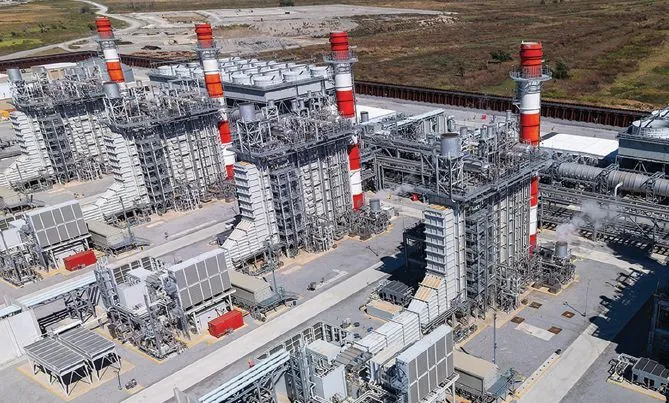
In most nations, one can tell whether industrial activity is strong or weak based on the preponderance of plant closures or plant openings. During 2026, plant openings have been on a tear, and we aren’t even talking about AI, bitcoin mining, EV batteries and hyperscale data centers.
During the first week of October, for example, metal fabricator Mayville Engineering Co., which creates products for agricultural, construction, commercial vehicle, power and defense equipment builders, said it would spend $26 million to build a new fabrication facility in Thomson, Georgia.
Mayville President and CEO Jag Reddy said the company experienced “stronger-thanexpected order activity within our commercial vehicle end market and continued momentum across our data center and critical power end market” during the first half. “We continue to invest in resources and equipment necessary to support accelerating customer demand. We are making selective decisions to prioritize capacity for highervalue, higher-margin programs that support long-term profitable growth.”
On Sept. 15, Howmet Aerospace announced that it would spend $70 million to expand its factory by about 100,000 square feet in Wichita Falls, Texas. The company plans to hire up to 230 people. More details were not available.
For all those who believed all their home appliances were made overseas, GE Appliances said it is expanding—through a $1 billion investment— its Louisville, Kentucky, factory in order to build more laundry equipment. As part of these plans, GE Appliances will invest more than $400 million to transform Building 5 into a high-output manufacturing operation for dryers, bringing production from Mexico to Kentucky.
“Investment in American manufacturing is critical to our economy and our communities,” said Carl Kennebrew, president of the Industrial Division of the Communications Workers of America, whose members work for GE. “Our union members are proud to manufacture appliances in Louisville.”
On Oct. 2, Simpson Strong-Tie broke ground on a $19 million facility in Fulton, Missouri, to bring under one roof its equipment solutions business, including Monet DeSauw saws, EasyFrame automated marking systems, and truss fabrication equipment.
AUTOMOTIVE
OEMs invest billions in North American operations, but sales volumes have not fully recovered
An employee at Ford Motor Co.’s Kentucky assembly plant works on an Expedition.
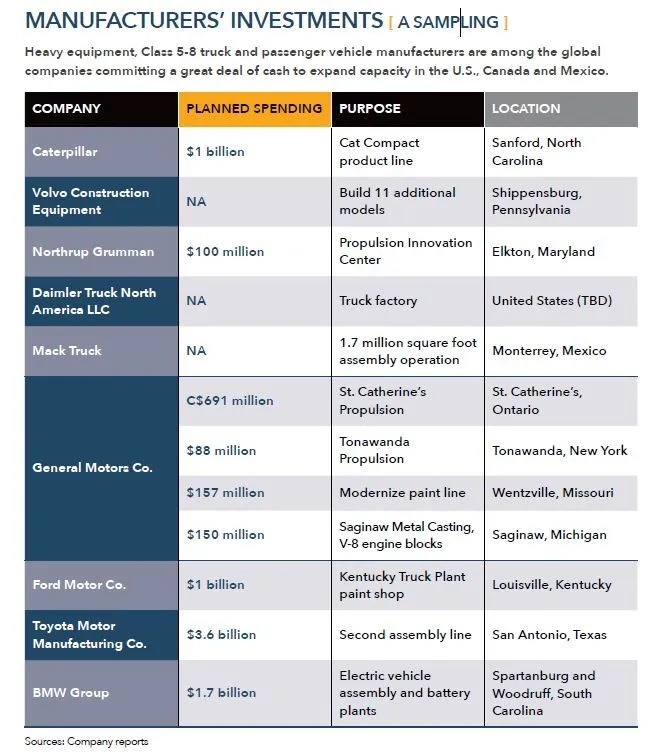
IN CANADA, GENERAL MOTORS CO. is investing C$691 million at St. Catharines Propulsion to support production of its sixth-generation V8 engines, which power full-size trucks and SUVs. GM will further fund facilities supporting related truck manufacturing and 10-speed transmission capacity.
Two new V8 engines will help power GM’s next-generation light-duty pickup portfolio in the 2027 Chevrolet Silverado 1500 and GMC Sierra 1500. GM previously announced funding for next-generation truck and V8 production as part of a $9 billion investment across U.S. manufacturing, including $888 million at Tonawanda Propulsion in New York.
The company also pledged to invest $157 million to modernize the paint line at Wentzville Assembly in Missouri and $275 million upgrading the Spring Hill manufacturing complex in Tennessee to support the Cadillac XT6 and the future 2.7L engine program. Last spring, GM committed $150 million for the Saginaw Metal Casting Operations to support the production of the sixth-generation of GM’s V-8 engine blocks and heads used in full-size pickup trucks.
Ford Motor Co. plans to build a $1 billion paint shop at Kentucky Truck Plant. That announcement followed Ford’s recent investments across Kentucky, including $2 billion for the transformation of Louisville Assembly Plant into the new manufacturing center for Ford’s new Universal Electric Vehicle Platform and $2 billion at Ford Energy Systems in Glendale, which will manufacture battery energy storage systems. The Ford Fathom, a midsize electric pickup, is expected to launch in 2027. Production at Glendale will start up in the second half of 2027.
Toyota Motor North America Inc. will spend $3.6 billion at its San Antonio plant in Texas, including the establishment of a second vehicle assembly line, which is scheduled to begin operations in 2030.
PARTNERSHIPS
In July, Toyota joined Volvo Group, Daimler Truck AG and cellcentric in an agreement to finance cellcentric as a developer and manufacturer of fuel cell systems for heavy-duty commercial applications. The automakers will collaborate on equal terms, with the aim of strengthening cellcentric’s technological lead, industrial scale and competitiveness in heavy-duty fuel cell technology. The partners aim to develop hydrogen supply and infrastructure and unlock the hydrogen ecosystem.
Stellantis, Wayve and Uber agreed to jointly explore the development and deployment of Level 4 (driverless) robotaxis at a global scale. The collaboration brings together Stellantis’ L4- Ready Platforms, Wayve’s AI driving technology and Uber’s global marketplace to power a new generation of fully autonomous vehicles.
“We are accelerating the deployment of autonomous vehicles that enables seamless mobility at scale,” says Ned Curic, chief engineering and technology officer at Stellantis.
Over the next five years, Stellantis plans to invest over 24 billion euros in global platforms, powertrains and new technologies. By 2030, Stellantis will broaden its multi-energy coverage with new hybrids, new battery electric vehicles and more efficient internal combustion engines.
EVs
The BMW Group completed a $1.7 billion upgrade at its Spartanburg, South Carolina, operations in June. The expansion of Plant Spartanburg and the construction of Plant Woodruff creates the foundation for the assembly of fully electric BMW vehicles. Together, Spartanburg and Woodruff form an integrated network supporting the future of BMW X model assembly and electrification in the United States. By 2030, BMW will assemble at least six fully electric models in the U.S., supported by high-voltage batteries made at Woodruff.
Mercedes-Benz meanwhile is working to spend $7 billion on U.S. operations by 2030, $4 billion of which will be used at its Tuscaloosa, Alabama, assembly plant.
HYBRIDS INCREASING
U.S. light-vehicle sales are expected to reach 16.1 million units in 2026 and only 16.4 million by the end of the decade, remaining well below the roughly 17 million annual sales levels that defined the market before the pandemic, according to Mobility Global’s latest forecast.
“We don’t see the U.S. returning to pre-pandemic levels of volumes,” said Peter Nagle, associate director for Americas Demand Forecasting at Mobility Global. “Something [is] constraining the market.”
Internal combustion engine vehicles and hybrids are expected to remain central to the market as consumers continue to weigh cost, convenience and lifestyle in choosing their next car. Mobility Global forecasts North American assembly of full hybrid electric vehicles (FHEVs) to surpass 3 million units in 2027—a 25 percent annual increase — with nearly a third of all North American light vehicle assembly expected to be FHEV by 2030.
CONSTRUCTION
Energy projects, data centers top the list for building starts in terms of scope, spending



Building starts were up YOY but steep materials costs, including metals and fuel, are postponing, canceling or putting some projects on hold.
FOR THE 12 MONTHS ENDING August 2026, total construction starts were up 14.5 percent compared with the 12 months ending August 2025, according to Dodge Construction Network. This was the latest data available as of Oct. 1.
“Data center, semiconductor and energy construction are driving growth, while several other sectors are facing subdued activity alongside deeper labor shortages, and accelerating material prices,” says Sarah Martin, director of economic research at Dodge Construction Network.
During the year ended August 2026, total nonresidential starts were up 17.9 percent compared to the same period ended August 2025. Commercial starts were up 48.6 percent, institutional starts fell 4.3 percent and manufacturing starts rose 2.8 percent over the same period.
The largest nonresidential building projects to break ground in August 2026 were $3.5 billion Amazon STACK Blanchard State Line Data Center in Mooringsport, Louisiana, the $3.2 billion Clarksville Hyperscale Data Center in Clarksville, Arkansas, and the $2.9 billion Bronx Detention Facility in Mott Haven, New York.
Year over year, total nonbuilding starts were up 27.6 percent. Environmental public works starts fell 3.7 percent compared to the 12 months ending August 2025. Highway and bridge starts rose 2.7 percent, miscellaneous nonbuilding starts were up 37.6 percent and utility/gas starts soared by 87.8 percent over the same period.
The largest nonbuilding projects to break ground in August included the $3.5 billion Steel River Energy Center in Wilson, Arkansas; the $1.4 billion Bluegrass Power Generation project in Jeffersonville, Ohio; and the $772 million Heritage Prairie Renewable Wind Farm in Dwight, Illinois.
Year to date through August, the value of construction put in place fell 3.1 percent compared to the same 12 months ending August 2025, according to the U.S. Census Bureau. Nonresidential construction spending fell 2.4 percent, with commercial office building projects being an outlier with a 11.2 percent increase in spending during the same period.
COST PICTURE
The producer price index for inputs to new nonresidential construction rose 8.9 percent between August 2025 and August 2026 as conflicts in the Middle East and steep tariffs on key materials led to rising prices “that are contributing to construction project delays,” according to an analysis and a survey by the Associated General Contractors of America (AGC).
Rising materials prices, along with higher labor costs, “are making it harder for many projects to pencil out, prompting some developers to place planned construction on hold. Construction firms are being squeezed by tariff- and war-induced materials cost increases, even as they boost wages to attract personnel,” says AGC Chief Economist Ken Simonson. “Those cost increases, according to our latest survey, are a major reason project owners are cancelling, postponing or scaling back projects.”
The largest price increases affected petroleum products, along with metals that are subject to tariffs of up to 50 percent. “The producer price index for diesel fuel, which reflects prices at the refinery or fuel terminal level, jumped 77.8 percent year over year. Metals prices also rose steeply over the past 12 months, climbing 27.3 percent for aluminum mill shapes, 23.4 percent for steel mill products and 20.9 percent for copper and brass mill shapes,” says Simonson.
Fifty-five percent of respondents to AGC’s latest survey reported having projects canceled, postponed or scaled back in the past six months. One-third of respondents attributed the disruptions to increasing costs. In addition, 13 percent cited lengthening or uncertain completion times, while 10 percent pointed to changes in demand or need, due to tariffs, and 6 percent listed changes in demand or need due to the Middle East conflict.
As firms pay more to address labor shortages and as materials prices continue to climb, “they are caught between pricing themselves out of the market or performing work at a loss,” says AGC CEO Jeffrey D. Shoaf. “Rising materials prices and a lack of real federal commitment to construction workforce development are acting as a brake on economic activity that could, if left unaddressed, have significant consequences for the broader economy.”
ARCHITECTURE FIRM BILLINGS
The AIA/Deltek Architecture Billings Index score for August was 47.2. Inquiries into new projects showed modest growth while the value of newly signed design contracts continued to decline. Sentiment about future billings has weakened at architecture firms as well.
Conditions in the broader economy remained mixed in August. Gasoline prices increased by a whopping 27.4 percent year over year. Builders also face a 0.25-percent increase in the prime borrowing rate, according to the AIA/Deltek report.
DEFENSE
Advanced weapons technology and support are a hot priority for the Pentagon
The U.S. Air Force and Northrop Grumman assemble an inert ICBM and advance toward Sentinel flight testing.
THE 2027 U.S. DEFENSE BUDGET is not yet determined and getting reliable spending data (real dollars) for previous fiscal years is impossible. However, given the sheer amount of contracts (and their potential value) issued by every service branch and the Defense Logistics Agency during 2026—not to mention foreign military agencies—the next few years is likely a boon for defense contractors and the industry’s supply chain.
We provide a few examples of newly built capacity for weapons, submarines and tactical vehicles, and look a small selection of contract letting as indicators of the health of the defense business in America.
COMBAT READINESS
On Sept. 8, Northrop Grumman opened a Propulsion Innovation Center in Elkton, Maryland, that houses 250 engineers working on advanced propulsion technologies for U.S. and allied defense programs. This new facility expands the company’s solid rocket motor (SRM) capacity across its propulsion manufacturing network. The center is part of a broader $100 million investment in Elkton to increase capacity for hypersonic airbreathing propulsion and SRMs.
A few days later the company, alongside the U.S. Air Force, fully assembled a Sentinel intercontinental ballistic missile (ICBM) in its operational orientation. The Sentinel will be flight-tested next year. Amanda Davis, vice president and general manager, strategic deterrent systems, Northrop Grumman, stated, “This vertical assembly demonstrates the momentum toward test launching in 2027, and having missiles on alert by the early 2030s.”
On June 3, Oshkosh Defense LLC said it received orders valued at $142 million for its family of medium tactical vehicles A2 platform from U.S. and international customers. “The continued demand for [our vehicles] reflects the platform’s ability to perform across a wide range of missions and environments,” said Pat Williams, chief programs officer for Oshkosh Defense. In late July, General Dynamics Electric Boat won a $29.5 billion contract for five Columbia-class submarines, $42.1 billion for nine Virginia-Class submarines and additional support for shipyard infrastructure. The contract awards “provide Electric Boat and our suppliers with the demand certainty we need to continue investing in capacity and hiring the workforce necessary to ensure we deliver these national security assets on schedule,” said President Mark Rayha.
On Sept. 21, Kratos Defense & Security Solutions Inc. and GE Aerospace ignited the GEK800 turbofan cruise missile propulsion system. Designated the F143, the system is designed to meet requirements for U.S. long-range, stand-off strike capabilities.
GE Aerospace has also advanced toward assembly of the XA102 adaptive cycle engine under the U.S. Air Force’s Next Generation Adaptive Propulsion program. “Our team is working to procure hardware and test subcomponents as we prepare for assembly,” said Jorge Perez, general manager of Edison Works Advanced Combat Engines.
M&A
Separately, GE Aerospace plans to acquire Consolidated Precision Products (CPP), which makes engineered castings and has supplied GE Aerospace for 15 years. “Investing in mission-critical casting capacity is needed to support the strong simultaneous demand across commercial engines, aftermarket and defense,” GE Aerospace Chairman and CEO H. Lawrence Culp Jr. stated.
Based in Cleveland, CPP manufactures investment and precision sand castings, producing complex super alloy, titanium, aluminum, magnesium and steel castings for commercial and military aircraft, weapon systems, commercial and regional/business jets, helicopters and industrial gas turbines.
CONSTRUCTION
A great many U.S. defense contracts specify building projects at home and abroad. These contracts were awarded during a three-day period in September.
• Walsh Federal LLC won a $191.3 million firm-fixed-price contract for construction services for barracks at Marine Corps Base Camp Lejeune in North Carolina.
• MEB General Contractors Inc. won a $963 million contract to upgrade the electrical distribution system at the Gosport substation at Norfolk Naval Shipyard.
• HSGS-Ameresco LLC was awarded a $51.6 million contract for design-bid-build construction of a power generation and microgrid project at Anniston Army Depot in Alabama.
• Grunley Construction Co. Inc. won a $45.9 million contract to build a warehouse, rail siding and track for the monitoring and inspection of railcars.
• Relyant Global LLC was awarded a $26.1 million contract to build an aircraft maintenance hangar in Comalapa, El Salvador.
• Consigli Construction Co., Inc., was granted $364.9 million for construction services at the Marine Corps Air Station in Cherry Point, North Carolina.
• BL Harbert International LLC was awarded $207.9 million for construction services for an aircraft maintenance hangar at the Marine Corps Air Station in Beaufort, South Carolina.
OIL & GAS
U.S. activity rises despite cost pressures, while Middle East remains in turmoil
Global oil demand over the past six months has averaged 5.8 million barrels per day less than in February.
THE DALLAS FEDERAL RESERVE
Bank’s third-quarter survey of 125 petroleum exploration, production and oilfield services firms, whose results were released Sept. 30, shows that activity in the sector further expanded last quarter. The pace of expansion slowed slightly but remained solid.
Both oil and natural gas production rose in the third quarter, according to executives. Cost pressures remained elevated across the sector. All cost indexes were above their series averages, suggesting costs are growing at a faster-than-average pace. The equipment utilization index for oilfield services companies increased while margins expanded at a slightly slower pace. Supplier delivery times continued to lengthen.
On average, respondents expect a West Texas Intermediate oil price of $79 per barrel two years from now and $82 per barrel five years from now, down from $88 during fourthquarter 2026. Survey participants foresee a Henry Hub natural gas price of $3.29 per million British thermal units (MMBtu) at year-end 2026, $3.82 two years from now and $4.28 per MMBtu five years from now.
GLOBAL VIEWPOINT
Toril Bosoni, head of the Oil Industry and Markets Division at the International Energy Agency (IEA), wrote in a Sept. 18 commentary that disruptions continue in the Middle East.
“If Gulf supplies remain constrained in the coming months and commercial inventory buffers continue to deplete rapidly, higher prices and further demand reductions may be required to close the supply-demand gap,” Bosoni says.
Six months after the start of the Middle East conflict, oil production and exports from the Gulf remain heavily restricted. Flows through the Strait of Hormuz averaged only 7.6 million barrels per day in August, recent data show, which “puts them 13.1 mb/d below pre-war levels, with cumulative export losses via the waterway approaching 2.8 billion barrels.”
Amid the losses of supply from the Gulf nations, producers outside the region raised output, adding 2.3 mb/d of oil supply since the start of the war.
Supply-side adjustments have been reinforced by an “equally important demand response.” Overall, Bosoni estimates that global oil demand over the past six months has averaged 5.8 mb/d less than in February, which equates to a cumulative demand reduction of more than 1 billion barrels.
China has seen the largest decline, with oil imports, refinery activity and product deliveries significantly lower than before the war began. “Chinese seaborne crude oil imports plunged from 11.5 mb/d in February to a low of 6 mb/d in June, easing the pressure considerably for other crude importers in Asia,” Bosoni reports.
End-user demand reductions occurred in other markets as well. “Notable declines were seen in the Middle East, where petrochemical operations and aviation have been restricted. Some governments, notably in Asia, have implemented fuel rationing and emergency conservation policies, while product supply shortfalls and higher prices have cut consumption in other countries,” Bosoni wrote.
Global oil demand fell by 5.3 mb/d year-on-year in the second quarter of 2026, the first quarterly decline since the pandemic. Global oil inventories have been drawing at record rates of 2.8 mb/d over the past six months. Observed oil stocks are now 507 mb lower than they were at the onset of the war, with IEA member countries having released more than 300 mb of emergency stocks.
“With inventory buffers rapidly depleting, the urgency of fully reopening the Strait of Hormuz and bypass routes is increasing,” the IEA expert says. “Any further disruptions that prevent a full recovery in production and exports will have major impacts on markets across the world.”
ELECTRIFICATION OFFSET
The IEA also performed an analysis that finds cost-effective technologies can bring proposed 35 percent electrification target within striking distance. The special report suggests that, based on technologies available today and energy prices at the levels seen before the onset of the current supply shock, electricity could cost-effectively meet onethird of the world’s final energy consumption by 2035, up from 23 percent today. Energy prices at their current levels, amid the Strait of Hormuz crisis, would make even more of the world’s energy consumption cost effective to electrify.
In a scenario in which fuel-importing countries speed up the electrification of their economies considerably, their energy import bills could fall by more than $400 billion by 2035 compared with 2025 levels. By then, faster electrification could mean the world is using 18 million fewer barrels of oil per day than it would have done otherwise; this would mainly be the result of a rapid uptake of electric vehicles.
Amid the Strait of Hormuz crisis, many countries are considering how they can further leverage electrification to reduce dependence on imported fuels while lowering emissions, the IEA reports.
HEAVY EQUIPMENT
Machinery builders invest in capacity and boost headcount to match demand growth
Diesel costs can affect everything from freight and production costs to farmers’ operating margins and equipment purchasing decisions.
MACHINERY SHIPMENTS increased 10.4 percent through the first eight months of 2026, compared with the same 2025 period, while new orders for machinery jumped 13 percent year over year, according to a recent U.S. Census Bureau durable goods report. Census found that unfilled orders (or backlogs) grew 7.6 percent in the same comparison, while inventories rose only 3.9 percent.
Farmer sentiment improved for the second month in a row during August, with the Purdue University-CME Group Ag Economy Barometer (AEB) Index increasing from 126 points in July to 135 points in August. A higher proportion of survey respondents expect their operation to be better off financially (28 percent) than worse off (24 percent) a year forward. Optimism regarding export prospects over the next five years also improved. The August barometer survey polled 402 farmers across the United States.
The Farm Equipment Manufacturers Association, in a Sept. 24 commentary, said that diesel was ‘the biggest cost story” that week, especially as Midwest prices exceeded the U.S. average. “For equipment manufacturers, higher diesel costs are important to watch because they can affect everything from freight and production costs to farmers’ operating margins and equipment purchasing decisions.”
November soybeans settled around $13.18 per bushel while December corn settled around $5.29 per bushel on Sept. 23. “Commodity prices can provide an early signal of where farm equipment demand may be headed, while fuel and material costs can have a more immediate impact on margins and operating expenses.”
Transportation equipment and machinery were among the manufacturing sectors indicating continued growth during September, according to the Institute for Supply Management’s manufacturing Purchasing Managers Index. Machinery builders reported more new orders and bigger backlogs in September.
One machinery builder responding to the ISM’s monthly survey cautioned, however, that “higher interest rates slow down the growth of new construction projects; we also have to face the higher cost of [imported] components due to tariffs and freight rates.”
In relation to supply chain, the company’s purchasing manager noted that “due to booming demand of AI and data centers, domestic steel capacity has been stretched and pushed. Higher steel costs each month increase our raw material and finished goods costs.”
EXPANSION MODE
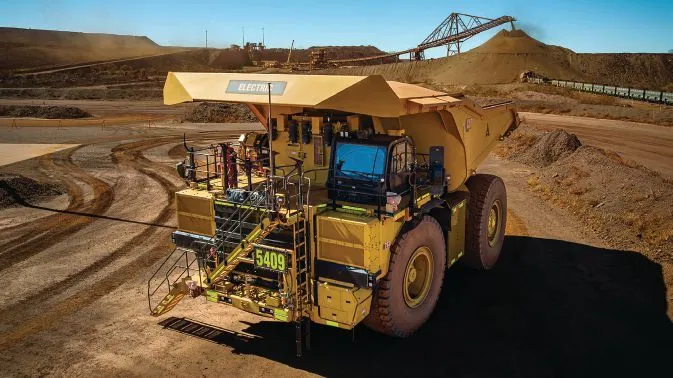
Several manufacturers of agricultural, construction and mining machines have chosen to increase capacity for various products, and they are choosing to focus primarily on U.S. customers with these expansions.
Caterpillar Inc. told shareholders on Sept. 30 that it intends to invest about $1 billion to expand manufacturing capacity for products that support its Cat Compact business.
Plans include a new manufacturing facility in Sanford, North Carolina, designed to increase production of compact track loaders and telehandlers. “As demand for compact equipment continues to increase, we’re investing to better serve this growing segment of customers,” said Caterpillar Construction Industries Group President Rod Shurman.
In August, Volvo Construction Equipment said it would “significantly expand” its U.S. footprint, resulting in more than 50 percent of its North American machine supply being produced in Shippensburg, Pennsylvania. Eleven additional models will be produced in Shippensburg, shortening customer lead times by more than six weeks. This decision brings Volvo CE’s North American production portfolio to 30 machine models, including excavators, wheel loaders and compactors.
“What you see today is manufacturing resilience in action: adapting with purpose and speed to increase capacity and build more machines closer to our customers,” said Scott Young, North American regional head.
The Volvo plant’s combined 436,000-squarefoot assembly and fabrication footprint creates three flexible production lines capable of building the full range of excavator, wheel loader and compactor models while adding new excavator welding capacity.
In mid-September, John Deere announced plans to bring more than 375 employees back to work across its Quad Cities factory operations. In total, the company has brought back or hired more than 800 employees across Iowa and Illinois since January 2026.
The company will return 150 employees to Seeding and Cylinder Operations in Moline and 225 employees to Harvester Works in East Moline. The additional workforce will help build dealer inventory ahead of future planting and harvest cycles, support long-term operational planning, and position the company to continue serving customers through all operating environments, including future labor negotiations.
“Planning ahead is part of our commitment to customers and our manufacturing workforce,” Dustin Lemmon, a spokesman for John Deere, said in a statement.
TRUCK & TRAILER
Equipment, fuel costs will continue to increase, but demand pushes orders and output upward
Early opening of 2027 trailer order books helped customers begin committing to next year’s equipment requirements.
LONG-HAUL FREIGHT TRUCK traffic on the National Highway System is projected to increase dramatically, according to the U.S. Bureau of Transportation Statistics. Projected data indicate that truck travel may increase from 193 million trips per day in 2017 to 332 million trips per day by 2050.
ACT Research’s latest short-term forecast, released Sept. 28, shows that freight activity is improving, but the market has not established a broad demand boom. Driver availability remains tight, and the return to tractor-fleet growth is only beginning to produce a capacity response. The challenge is understanding how these changes affect individual markets. Stronger freight rates, higher equipment orders, rising production and improving retail sales describe different stages of the cycle and do not necessarily move together, ACT Research analysts wrote in the forecast report.
“Demand is becoming a more meaningful contributor after a recovery that was initially driven primarily by supply constraints. When available capacity is already limited, even modest additional freight can affect truck availability, carrier acceptance and pricing.”
Improving tractor sales and the beginning of fleet growth indicate that suppliers are responding. Replacement of aged equipment, exports, driver constraints and acquisition costs limit how quickly new purchases become additional domestic freight-hauling capacity.
North American Class 8 orders increased 32 percent year over year in August. Orders declined from July (on a seasonally adjusted basis) with full 2026 backlogs and the timing of 2027 orderboards affecting monthly activity. “That distinction matters when interpreting demand,” the analysts wrote. “Order intake reflects customer interest, but it also depends on whether manufacturers have production slots available to sell.”
Class 8 backlogs remained above historical norms, although they declined as production outpaced new orders. Production increased in August, and OEM build plans moved higher.
In August, Class 5–7 orders increased 37 percent year over year. However, dealer stocking and purchasing ahead of anticipated equipment-cost changes may be contributing to order activity.
The trailer market strengthened further in August. Net orders reached roughly 24,300 units, increasing 195 percent from the unusually weak year-ago comparison. Early opening of 2027 order books helped customers begin committing to next year’s equipment requirements.
Trailer backlogs increased as orders exceeded production. Improving freight economics, aging equipment and replacement requirements are supporting purchasing interest, ACT Research reports.
REGULATORY COSTS
“With the 2026 order season now complete, attention is shifting to backlog execution, model year 2027 pricing and build slotting, and fleets’ response to the choice between noncompliance penalty (NCP)-supported current-generation engines and fully compliant EPA 2027 technology,” according to FTR Transportation Intelligence. “The EPA 2027 NOx pre-buy has been an important support for Class 8 demand, though EPA’s proposed flexibility should reduce transition risk.”
NCPs (per-engine fees that allow transitional sales of engines above the new NOx limit) could add $6,000 to $7,000 per engine, likely as a direct pass-through to fleets. In comparison, a fully compliant 2027 engine will carry an OEM upcharge of $8,000 to $12,000, FTR predicts.
NEW CAPACITY
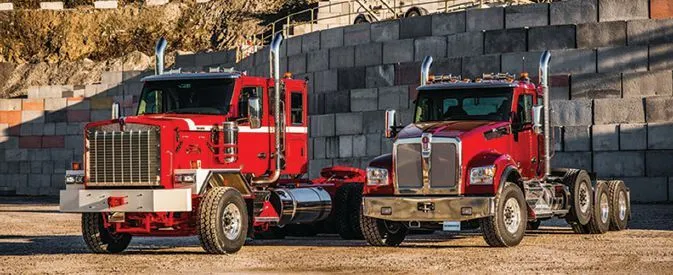
Meanwhile, engine and tractor manufacturers continue to invest in North American production.
Daimler Truck North America LLC, for example, plans to build a manufacturing facility in the United States. As of early October, a site had not been disclosed. “This investment reflects our confidence in the future of commercial transportation and the strength of the North American market,” President and CEO John O’Leary said. The greenfield factory will expand Daimler Truck’s manufacturing capacity and strengthen both vocational and onhighway production. Operations are targeted to begin in 2029.
Volvo’s Mack Truck division opened a 1.7 million-square-foot assembly operation in Monterrey, Mexico, this year to manufacture heavy-duty conventional vehicles.
DIESEL PRICES
The national U.S. average diesel price per gallon rose to a record high of $6.53 in September. Diesel has become one of the most closely watched indicators in freight transportation, according to third-party logistics firm C.H. Robinson, which released its latest Edge Report Oct. 1.
“The immediate concern is often diesel pricing and distribution dynamics. Although widespread shortages have not emerged, isolated supply constraints and higher fuel costs are adding pressure across freight networks for carriers and shippers alike,” the report states. “The impact is being felt across transportation modes. For truckload carriers, cash flow can be challenging when diesel prices rise faster than shipper fuel surcharges kick in.
“Businesses building 2027 transportation budgets should plan for fuel costs and fuel surcharges to remain elevated relative to historical norms,” the logistics firm advises.