






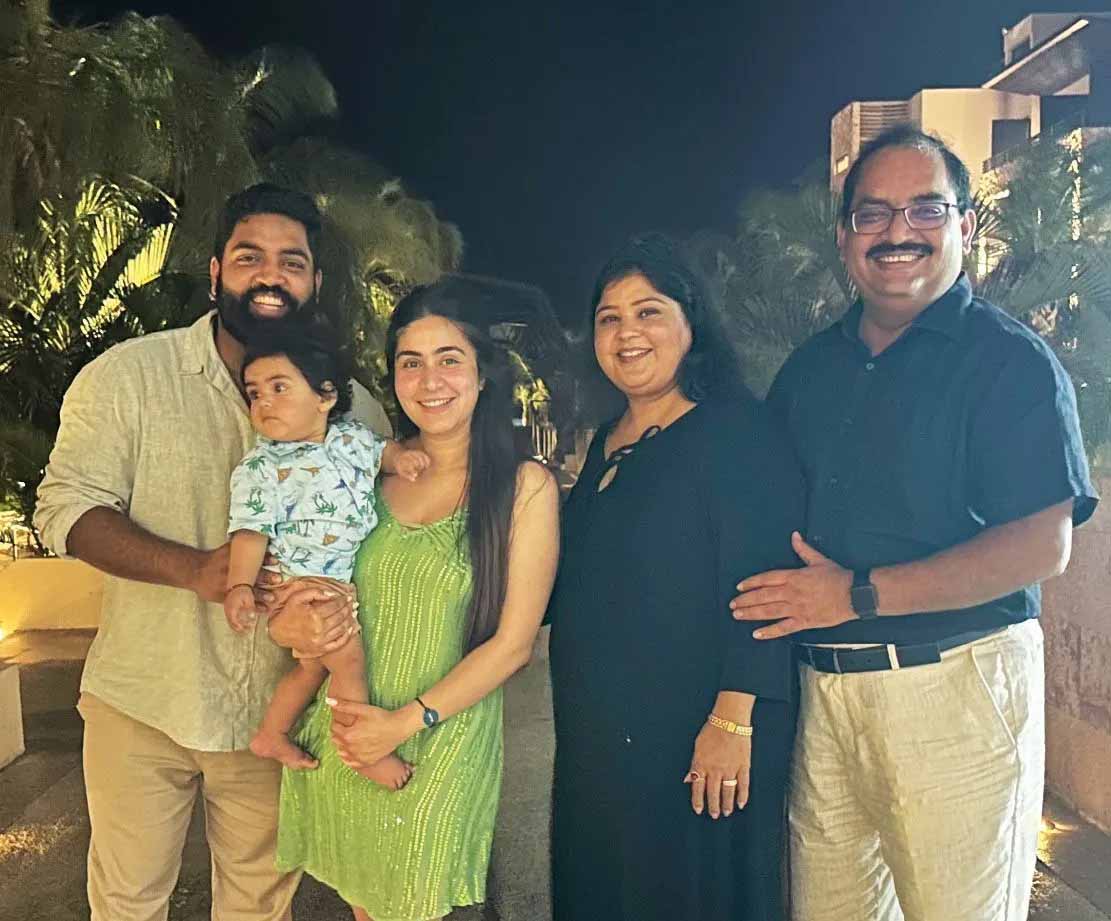
Above: Piyush Shukla, left, with his wife, Harleen, child and parents. Shukla’s father was a steelworker at Tata Steel in India
October, 2026- In his nomination letter to the panel of judges at Steel Market Update and CRU Group, Algoma Steel CEO Rajat Marwah credited Piyush Shukla with having developed a “unique understanding of both steelmaking operations and corporate strategy.” Such a “broad perspective enables [Shukla] to connect operational realities with long-term business objectives, making him a trusted advisor and influential leader across the organization.”
Shukla is Algoma Steel’s Manager of Risk, Strategy and Market Intelligence. Marwah says he “exemplifies the qualities of an SMU NexGen leader through his combination of innovation, leadership, strategic thinking and commitment to developing others.”
IN THE BLOOD
“I was born in India, in a steel town. My father used to work at Tata Steel, so I am a second-generation steelworker. We came to Canada when I was 16,” says Shukla who, with his wife Harleen, has two sons.
He studied at Queens University in Kingston, Ontario, and joined Algoma Steel, Sault Ste. Marie, Ontario, as an intern in 2013. He was hired in 2014 for a full-time job as a frontline maintenance staff member.
“After being inside the plant and gaining that exposure, I went back and took courses in electrical engineering and computer science. The internship showed me the skills of the place—it’s a 100-year-old plant that has opportunities many times over. I wanted to learn and contribute.”
“When I first started, a lot of people I worked with were second- and third-generation steelworkers, and almost every member of the community is linked to the steel plant through friends or family. The sense of community was very high. I found that attractive from a personal point of view,” Shukla says.
He entered the graduate engineer training program at Algoma, which allowed him “to see every part of the steelworks. That set the foundation for me to understand all the processes very well. I took on roles in operations and maintenance, then reliability. That taught me a lot about systems, how to understand the discipline we must have in constructing processes.”
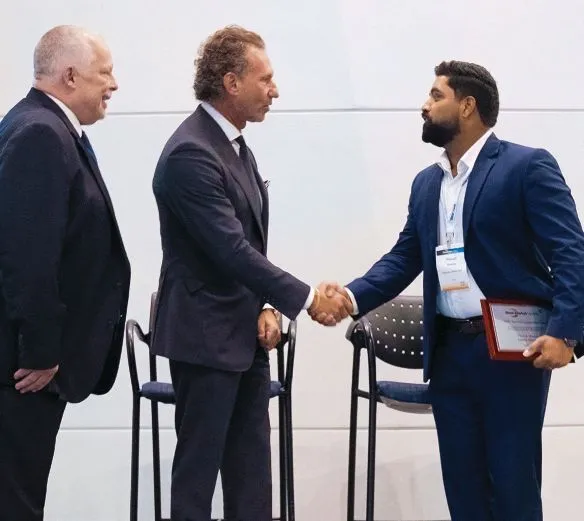
Christopher Graham of Steel Dynamics Inc. and Jeremy Flack of Flack Global Metals congratulate Piyush Shukla, manager of risk, strategy and market intelligence for Algoma Steel, the 2026 award winner.
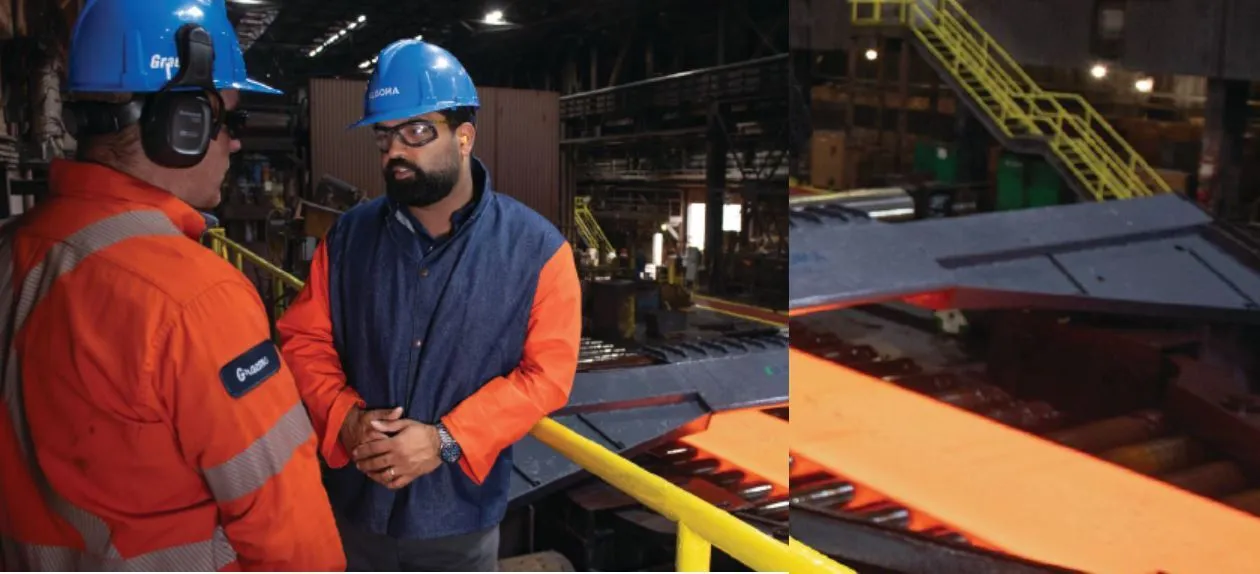
Shukla earned a degree from Queens University and later went back to school for courses in electrical engineering and computer science.
RISK MANAGEMENT
“A strong innovator, Piyush has played a leading role in advancing integrated business planning at Algoma Steel,” Marwah wrote in his nomination letter. Shukla “leads portfolio management reviews that improve visibility into performance, prioritization and capital alignment across the business. His efforts have strengthened decision-making and supported initiatives aimed at increasing throughput, optimizing production volumes, and responding to changing market, trade and tariff conditions.”
In 2020, Shukla was tasked to develop and implement a risk management program touching every aspect of company operations.
Enterprise risk, he explains, “is any risk that has a catastrophic impact on the company’s ability to function. That can range from cybersecurity to HR to financial matters to international trade,” Shukla says. “We have a combination of programs, not just analytics, but also focusing on the right risks and elevating the key issues to the executive team. This helps the organization develop mitigation plans and control outcomes.”
He sought to design the risk management system “so that it was a tool for decisionmaking and not just a blind exercise. Earlier roles on the front line [of steel operations] informed me on program structure. From there, I had further exposure to insurance, compliance management and I got more into the strategy and market intelligence side.”
“It morphed into a role that was small to begin with, but which grew into all these areas that require structure or a process to be built around,” Shukla says. “We leveraged what we learned across more processes to govern them and create a framework for risk. The job became enterprise wide and touched all facets of the organization, including cybersecurity, commercial operations, human resources and all critical business processes.”
TRANSFORMATION
Marwah wrote that Shukla’s leadership extends “well beyond his formal responsibilities. He led the development of Algoma Steel’s corporate strategy through board approval and was instrumental in one of the most significant transformations in its history: the transition from traditional integrated steelmaking to electric arc furnace steelmaking.”
Shukla’s “ability to simplify complex issues, align stakeholders and drive meaningful action has contributed to stronger organizational performance and strategic focus during a pivotal time for the company,” Marwah wrote.
“We completed a big transformation from blast furnace to EAF,” Shukla says, adding that “complete modernization gave us flexibility. We are more competitive in the products we make and are more prepared for the future.”
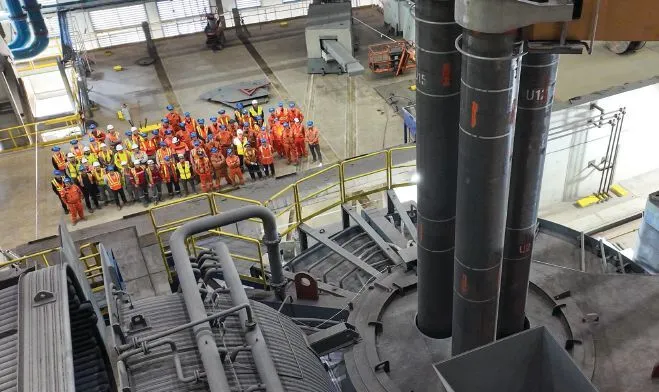
Algoma Steel has moved from blast furnace steelmaking to electric arc furnace steelmaking, both to modernize and reduce carbon emissions.
TECHNOLOGICAL TOOLS
Algoma’s CEO cited Shukla’s effort to have the company adopt artificial intelligence and data-driven insights to improve operational effectiveness and support informed business decisions.
Alongside the executive team, “we are driving a lot of technology and helping with AI adoption. We are looking at how we can enable more and more people to use tools and become more effective,” says Shukla. “We are developing an AI adoption roadmap. That is to help the organization learn how to leverage these platforms to have better decisionmaking and create more efficiencies in our processes.” He notes that the steel industry’s manufacturing customers are adopting AI.
There are other projects his team is pursuing, such as assisting the commercial team with exploring new markets, developing deeper market intelligence—what will customers need in the future? “As we pivot to the domestic market, we must understand their needs and align our path with that.”
GUIDANCE
Shukla says he has “been fortunate” with mentors at Algoma. “They have shaped me as a leader.” However, this “started at home with my father. Honesty and ethics are a guiding light for me. I was taught to spend more time with issues instead of getting results fast. I try to incorporate that. I have had other guidance and support. A combination of freedom and guidance is what actually develops people. I have been able to learn and grow in the past few years.”

There is a lot of growth opportunity for anyone looking to create a career in the metals industry,” says Shukla.
He believes this decade is “most interesting,” in part due to trade relations and the increasing knowledge of sourcing of steel especially.
“There is a lot of growth opportunity as well for anyone looking to create a career in the metals industry. Anyone with a complementary skill set can do very well. We have a lot of forces coming together to make it even more interesting,” Shukla says.
He concedes that metals “is not the most glamorous industry but it’s very important to our society. We need steel for a million applications. It’s the DNA of our civilization. It has so much to give.”
In the nomination letter, Marwah mentions that Shukla is committed to developing future leaders. “Piyush actively mentors young professionals, helping them understand how their work contributes to broader organizational goals while encouraging growth within the steel industry. Through his guidance, knowledge sharing and collaborative approach, he has become a respected resource and positive influence across the organization.”
Says Shukla, “I highly encourage young people to explore this option—we need talent to grow and transform this industry.”